
News and Research
For Immediate Release
7/22/2026
PRESS RELEASE: As Austin Weighs Cuts, New Report Highlights Impact of Violence Prevention Programs.
Analysis finds violent crime fell fastest in neighborhoods served by community-based programs; nearly $17 million in safety and victim services is at risk.
AUSTIN, TX — Violent crime declined across Austin between 2021 and 2025, with significantly steeper reductions in neighborhoods served by community violence intervention programs, according to a new analysis of Austin Police Department data.
The findings come as the Austin City Council considers budget decisions that could determine the future of programs associated with those public safety gains. With federal ARPA allocations and grants expiring, nearly $17 million in funding for community safety and victim services—including the Harvest Trauma Recovery Center—is now at risk across the Austin area.
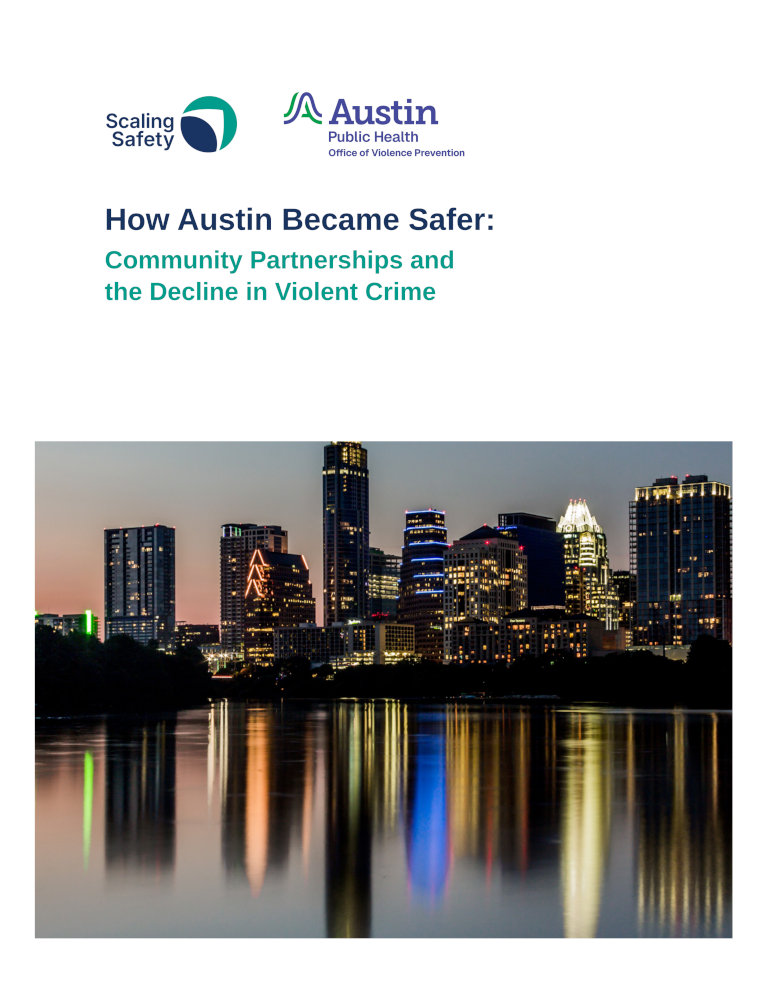
The report, How Austin Became Safer: Community Partnerships and the Decline in Violent Crime, was released by Scaling Safety, a joint initiative of Just Safe and The Community-Based Public Safety Collective, in partnership with Austin Public Health’s Office of Violence Prevention.
Researchers found:
- Violent crime declined citywide between 2021 and 2025, with no evidence that violence was displaced into neighboring communities.
- Census block groups served by community violence intervention organizations experienced statistically steeper declines in homicide and aggravated assault than areas without program coverage.
- Among the neighborhoods with the steepest declines in violent crime, 97% had community violence intervention programs and 93% were within three miles of a participating organization.
- Austin residents strongly support community-based approaches to public safety, even as many crime victims—particularly in neighborhoods experiencing the most violence—remain disconnected from needed services.
Community violence organizations mentioned in the report include: ATX Peace, the city’s first CVI program, whose work spans the time period examined in the report, along with Hungry Hill Foundation, Tomorrow’s Promise Foundation, and the Harvest Trauma Recovery Center.
“Every budget reflects a community’s priorities,” said Terra Tucker, Strategic Lead for Scaling Safety Austin and Managing Director of Advocacy at Just Safe. “Austin has achieved something remarkable: violent crime declined across the city, and the neighborhoods served by community violence intervention organizations experienced even steeper reductions. The question is not whether Austin can afford to sustain these programs. It is whether Austin can afford to lose the infrastructure that helped make these gains possible.”
The report also documents the broader role of Austin’s violence intervention network during emergencies.
Following the March 1, 2026, mass shooting in Austin’s entertainment district, organizations including Harvest Trauma Recovery Center, ATX Peace, Hungry Hill Foundation and Tomorrow’s Promise Foundation were activated alongside traditional emergency responders. They helped stabilize communities, counter misinformation, support victims and connect survivors with long-term trauma services.
Researchers said the response appears to be among the first documented examples of community violence intervention organizations being formally integrated into a city’s response to an indiscriminate mass shooting.
“Our findings reinforce what communities across the country are increasingly seeing,” said Cynthia Simons, City Coordinator for Scaling Safety Austin. “Public safety is strongest when law enforcement and community based organizations are both recognized for their complementary roles in keeping Austin safe and community violence intervention is effectively resourced. . Austin’s experience shows the value of investing in neighborhood groups that prevent violence before it happens and help victims recover when tragedy occurs.”
The analysis found a statistically significant relationship between community violence intervention coverage and larger reductions in violent crime. Although additional research would be needed to establish direct causation, the findings align with a growing body of national evidence supporting community-based violence prevention.
The report also found:
- One in four crime survivors received no services after being victimized.
- Seventeen percent of residents said they did not seek help because they did not trust available systems.
- One in six residents identified neighborhood initiatives, youth programs or community-based organizations as among the most important ways to reduce violence.
- National polling found that 80% of law enforcement officers believe services traditionally provided by community violence intervention organizations help prevent retaliation and make officers’ jobs safer.
Without renewed investment, the report warns, Austin could lose trusted relationships, neighborhood presence and crisis-response capacity that took years to build.
About Scaling Safety: Scaling Safety is a collaborative initiative led by Just Safe and the Community-Based Public Safety Collective, designed to integrate community-led violence prevention into the core of public safety infrastructure. By empowering residents, Scaling Safety builds sustainable programs that reduce violence, heal communities, and create permanent pathways to safer cities. Learn more.
How Austin Became Safer: Community Partnerships and the Decline in Violent Crime
7/21/2026
New Report reveals violent crime declined across Austin between 2021 and 2025, with significantly steeper reductions in neighborhoods served by community violence intervention programs, according to a new analysis of Austin Police Department data.

I lost my son and 13 of my friends to gang violence. I know how to stop it.
1/17/2026 - USA Today
Violent crime has dropped in many places because of strategies that involve ‘interrupting’ violence, supporting victims and giving young men healthy options. But federal funding cuts put that at risk.

Community-Based Violence Prevention Gets 63 Million Boost from The Audacious Project
1/8/2026 - Inside Philanthropy
Community-based violence prevention is receiving major momentum with a $63 million investment from The Audacious Project, underscoring the growing recognition that community-led solutions are key to lasting public safety. This article highlights how bold philanthropy is accelerating proven, people-centered approaches that are changing lives and communities.
Scaling Safety Joins The Audacious Project's 2024 Cohort
The Audacious Project supports big ideas to foster change around the world’s most urgent challenges. Today, this innovative funding initiative, housed at TED, is announcing its new cohort of projects for 2024, which are as bold as ever.
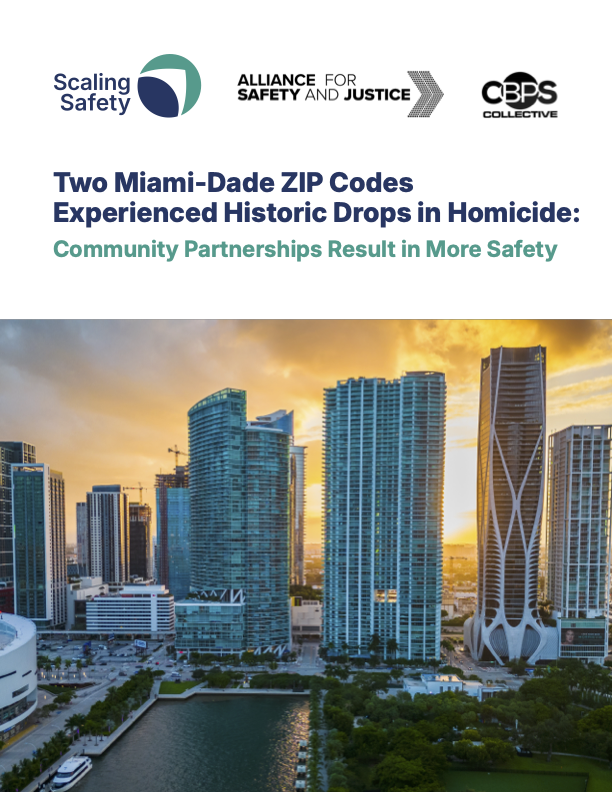
Two Miami-Dade ZIP Codes Experienced Historic Drops in Homicide: Community Partnerships Result in More Safety
Two ZIP codes in Miami-Dade county achieved remarkable reductions in homicides between 2020 and 2024, demonstrating the power of coordinated public safety efforts impacted communities and most voters want.

How did homicides plummet in 2 Miami-Dade ZIP codes? The answer offers a lesson | Opinion
9/8/2025 - Miami Herald
When two ZIP codes in Miami-Dade pop up in the news, too often it’s a story involving gun violence. Historically, 33147 and 33142, covering Liberty City, Allapattah and parts of Little Haiti, have had some of the county’s highest homicide rates.
But a recent report indicates these neighborhoods may offer a model for addressing gun violence.
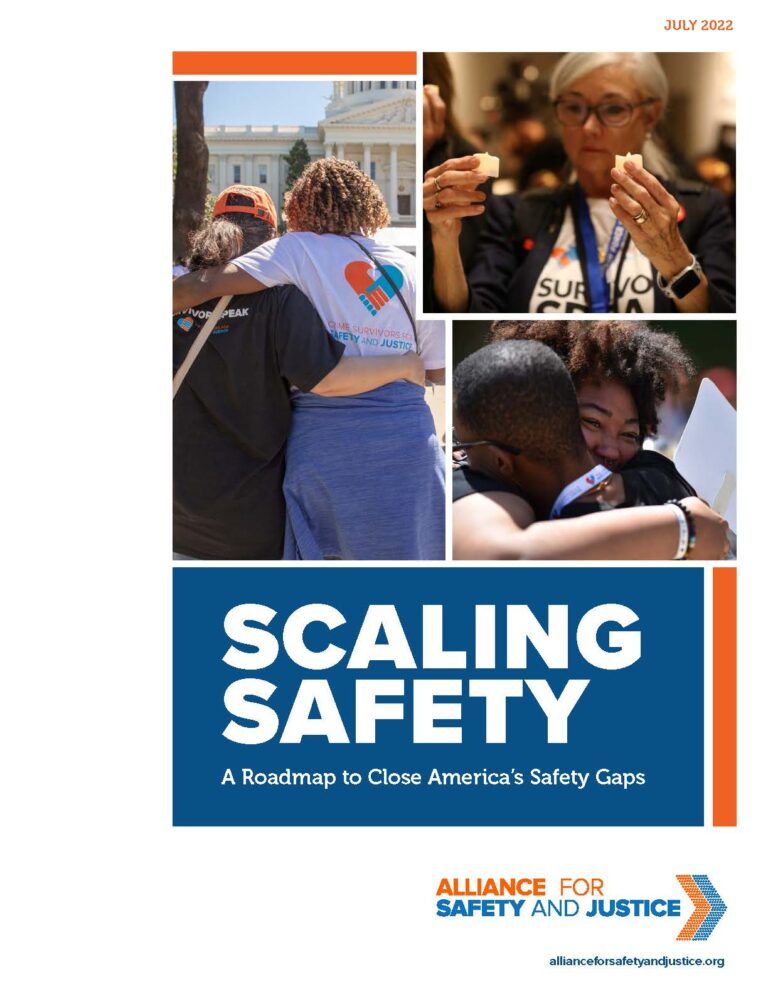
Scaling Safety: A Roadmap to Close America's Safety Gaps
Put simply, communities have not been equipped to prevent crime. This report is a first-of-its-kind attempt to estimate what it would take to bring to scale the very safety solutions that both impacted communities and most voters want.